
Troubleshooting

Microsoft Internet Information Services (IIS) 10.0 powers millions of websites, but unpatched vulnerabilities can expose your systems to exploits. These 10 critical security flaws demand immediate attention to prevent breaches, data leaks, or server takeovers.
CVE-2023-24941: HTTP/2 Request Smuggling

If your shared hosting environment relies on IIS 10.0 with HTTP/2 enabled, you’re at risk of CVE-2023-24941, a request smuggling flaw that lets attackers bypass security controls and hijack sessions. This vulnerability exploits how HTTP/2 multiplexes requests, allowing malicious actors to manipulate headers and slip past tenant isolation in multi-tenant setups.
The flaw affects all IIS 10.0 configurations using HTTP/2, with Microsoft assigning it a high-severity rating (CVSS 8.1). Attackers can craft malicious requests to bypass WAFs, rewrite cookies, or inject malicious content into legitimate sessions. The exploit works even when tenant isolation is enforced, making it especially dangerous for hosting providers.
This is a must-patch for shared hosting providers, SaaS platforms, and any organization using IIS 10.0 with HTTP/2. Microsoft’s June 2023 security update includes a fix—apply it immediately to prevent session hijacking and data breaches. ⚡
CVE-2022-26923: WebDAV Remote Code Execution

If your internal dev servers rely on WebDAV for file sharing, you're walking a tightrope with CVE-2022-26923. This vulnerability lets attackers silently upload malicious files that execute with server privileges—no user click required. The exploit chain abuses WebDAV's file upload capabilities to drop and run arbitrary code, making it a silent but deadly threat.
The flaw affects IIS 10.0 when WebDAV is enabled, particularly in development environments where authentication may be lax. Microsoft rated this a Critical severity (CVSS 9.8), emphasizing its potential for full server compromise. The attack works by crafting a malicious file with a double extension (e.g., payload.exe.txt) that IIS processes as executable code upon upload.
Dev teams and sysadmins managing internal test servers should prioritize this patch. Disable WebDAV if unused, or apply KB5005039 immediately. 💻
CVE-2021-38666: Server-Side Request Forgery

If your IIS 10.0 server acts as a proxy or API gateway, CVE-2021-38666 could let attackers bypass your network perimeter entirely. This Server-Side Request Forgery (SSRF) flaw tricks the server into making unauthorized internal requests—like accessing database servers or internal APIs—using your server’s own privileges.
The vulnerability exploits how IIS processes HTTP requests with malicious headers, forcing it to connect to internal resources you never intended to expose. Microsoft rated this a critical severity issue, especially for environments where IIS handles internal service discovery or cross-domain requests. Unlike previous exploits we covered, this one doesn’t require file uploads or session hijacking—just a cleverly crafted request.
Organizations using IIS as a reverse proxy (e.g., for microservices or legacy systems) or as an API gateway should prioritize this patch. Even if you don’t expose internal services externally, misconfigurations could still leak sensitive data. 💻
CVE-2021-34473: ASP.NET Core Denial-of-Service

If your ASP.NET Core web apps run on IIS 10.0 and handle high traffic, CVE-2021-34473 could turn your site into a crash-prone nightmare. This denial-of-service (DoS) flaw exploits malformed requests to force server instability, crippling availability during peak shopping seasons or sales events.
The vulnerability targets ASP.NET Core 3.1 and 5.0, where attackers send carefully crafted HTTP requests that trigger unhandled exceptions in the runtime. Unlike remote code execution flaws, this one doesn’t require admin access—just a single malicious request can spike CPU usage to 100% and trigger 500 errors across your entire site. Microsoft’s patch (via KB5000860) fixes the underlying request parsing logic, but unpatched servers remain vulnerable to automated DoS attacks.
E-commerce teams running Black Friday promotions or SaaS providers with multi-tenant apps should prioritize this fix. The zero-day window for exploitation was brief, but the impact—lost sales, abandoned carts, and brand damage—can last far longer. ⚡
CVE-2020-17029: Path Traversal in URL Authorization

If your IIS 10.0 server hosts sensitive files like configuration backups or proprietary documents, CVE-2020-17029 could let attackers bypass URL authorization entirely. This path traversal flaw exploits how IIS processes URL requests, allowing attackers to navigate outside intended directories by manipulating path strings—no authentication required.
The vulnerability stems from improper URL validation in IIS's default web server configuration, where attackers can use sequences like ../../../ to access files outside the web root. Microsoft rated this a critical severity fix in KB4534273, affecting all IIS 10.0 installations with default settings. The exploit works silently, making detection difficult without proper logging.
Organizations storing confidential files in web-accessible paths (e.g., development environments, shared hosting) should prioritize this patch. Enabling strict URL rewriting rules and restricting directory listings adds an extra layer of protection. 💻
CVE-2020-0688: ProxyShell Exploit Chain

If your organization relies on Microsoft Exchange Server or hybrid cloud setups, CVE-2020-0688 (ProxyShell) isn’t just another vulnerability—it’s a three-in-one exploit chain that grants attackers remote code execution with alarming ease.
This exploit combines CVE-2021-34473 (pre-auth RCE), CVE-2021-34523 (post-auth RCE), and CVE-2021-31207 (privilege escalation) to bypass security controls entirely. It targets Exchange Server 2013–2019, making hybrid environments—where on-premises servers connect to Azure—especially vulnerable. Attackers can deploy ransomware, steal data, or pivot to internal networks without triggering alerts.
IT admins managing Exchange integrations or shared cloud-resource setups should prioritize patching (via Microsoft’s July 2021 security updates) and disable Outlook Web Access (OWA) until patched. This exploit chain has been weaponized in real-world attacks, proving it’s not just theoretical. 💻
CVE-2019-19781: Kerberos Authentication Bypass

If your enterprise relies on Active Directory and IIS 10.0 for authentication, CVE-2019-19781 is a silent threat waiting to impersonate your users. This Kerberos authentication bypass flaw lets attackers forge Ticket Granting Tickets (TGTs), tricking systems into treating them as legitimate users—without setting off alarms.
The vulnerability exploits a flaw in how Windows Server 2016/2019 validates Kerberos tickets, allowing attackers to bypass SPN (Service Principal Name) validation and escalate privileges. Microsoft’s patch (KB4490481) fixes the issue by tightening ticket validation logic, but unpatched systems remain exposed to lateral movement and privilege escalation in AD-integrated environments.
This is especially critical for financial institutions and healthcare providers handling sensitive data, where impersonation could lead to data exfiltration or regulatory violations. If your IIS servers authenticate via Kerberos, prioritize this patch—it’s not just about access, it’s about trust. 💻
CVE-2019-0859: ASP.NET Core Memory Corruption

If your SaaS platform relies on ASP.NET Core running on shared IIS instances, CVE-2019-0859 could silently sabotage your stability. This memory corruption flaw doesn’t just slow things down—it triggers unpredictable crashes and application misbehavior, turning reliable services into unreliable ones overnight.
The vulnerability exploits how ASP.NET Core 2.2 and earlier handles memory allocations, leading to heap corruption under specific request patterns. SaaS providers hosting multi-tenant applications are especially vulnerable, as a single tenant’s malicious input could destabilize the entire shared environment. Microsoft’s patch (via .NET Core 2.2.5) fixes the underlying memory management logic, but unpatched systems remain at risk of unexpected reboots or silent failures.
This is a must-patch for any organization running ASP.NET Core on IIS 10.0 with shared hosting models. Prioritize this if your uptime SLA depends on consistent performance. ✨
CVE-2018-8423: HTTP Request Splitting

If your banking application relies on IIS 10.0, CVE-2018-8423 could turn stolen session cookies into a full account takeover. This vulnerability exploits how IIS processes HTTP headers by injecting malicious newline characters, splitting requests into separate transactions that bypass security controls.
The flaw affects IIS 10.0 with HTTP header parsing enabled, particularly when handling session cookies or authentication tokens. Attackers can manipulate headers like Transfer-Encoding or Content-Length to smuggle requests, hijacking active sessions without triggering alerts. Microsoft’s patch (KB4343895) fixes the header parsing logic, but legacy systems may still be exposed.
Financial institutions and any organization processing sensitive data via IIS should prioritize this patch. The risk isn’t just theoretical—real-world exploits have targeted banking APIs where session integrity is critical. 💡
CVE-2017-7269: IIS Short Name Denial-of-Service
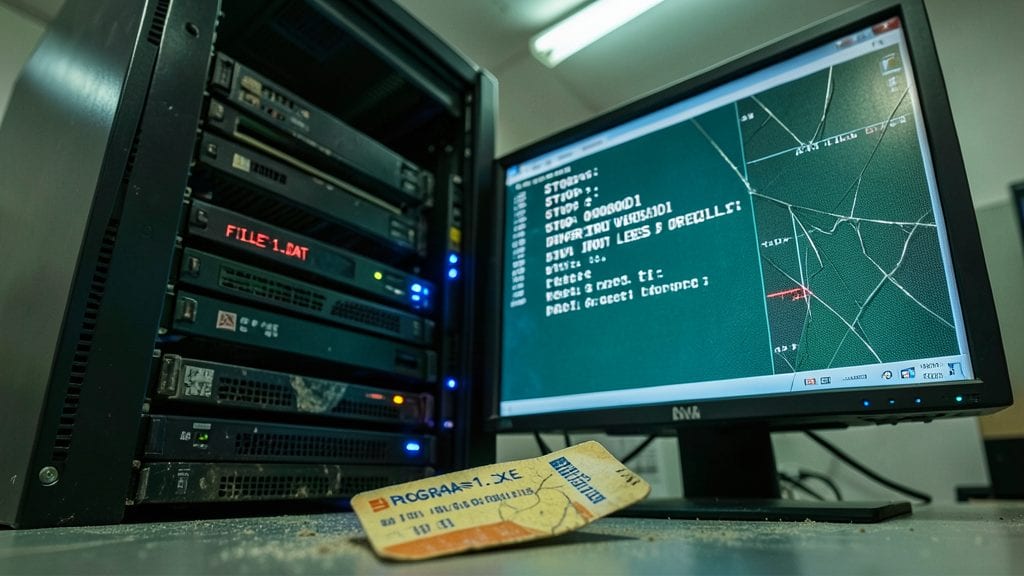
If your legacy applications still rely on Windows file system compatibility, CVE-2017-7269 could silently cripple your IIS servers. This Denial-of-Service (DoS) flaw exploits malformed 8.3 short filenames—a relic of older Windows versions—to trigger server hangs, leaving your site unreachable until rebooted.
The vulnerability stems from IIS's handling of legacy filename formats (like PROGRA~1 instead of Program Files). Attackers send carefully crafted requests with these short names, causing the server to enter an unstable state. Microsoft rated this high-severity, and while it’s older, it persists in environments running unpatched IIS 10.0 with legacy app support enabled.
This one’s a sneaky risk for enterprise archives, financial systems, or healthcare apps still using legacy file structures. If you’re running IIS in a high-availability cluster, this could force unexpected downtime. Patch now—it’s a zero-day wait for attackers. ✨