
Operating System
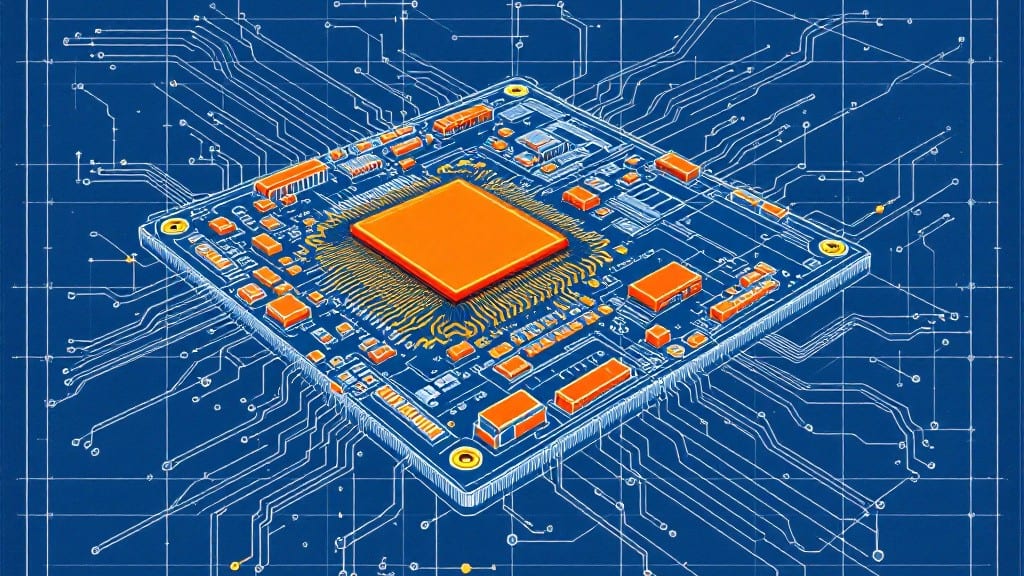
A GPU (graphics processing unit) on a computer is a specialized hardware component designed to accelerate rendering tasks, handle complex visual computations, and enhance performance for graphics-heavy applications like gaming, video editing, and 3D modeling. Unlike the CPU, it processes thousands of threads simultaneously for faster image generation and smoother visuals.
A GPU is essentially your computer's visual powerhouse, built to handle massive parallel computations that CPUs simply can't match. 💫 Think of it like a factory assembly line for graphics—while your CPU might handle one complex task at a time, a GPU divides that work across hundreds of smaller cores, making it perfect for real-time rendering in games or fluid animations in video editing.
My first experience with this was when I upgraded my uncle's old IBM to handle early 3D modeling software—what took hours suddenly rendered in minutes.
What makes GPUs so special isn't just their speed, but their ability to handle specialized tasks like ray tracing or AI upscaling that would overwhelm a standard processor. This is why gamers and designers often prioritize GPU upgrades over CPU upgrades—the visual impact is immediate and dramatic.
For example, switching from a basic integrated GPU to a dedicated NVIDIA RTX card can turn a choppy 60 FPS experience into buttery-smooth 144 FPS gameplay.
💡 In This Article
- How GPUs Differ from CPUs in Processing Power
- When to Upgrade Your GPU for Better Performance
How GPUs differ from CPUs in processing power
The fundamental difference between GPUs and CPUs lies in their architecture. A CPU (central processing unit) uses a few powerful cores designed for sequential tasks—think of it like a Swiss Army knife handling one complex job at a time.
In contrast, a GPU packs hundreds of smaller cores optimized for parallel processing, making it more like a factory assembly line where thousands of tasks happen simultaneously.
For example, NVIDIA's RTX 4090 features 16,384 CUDA cores, while a high-end CPU like Intel's i9-14900K has just 24 cores—but those CPU cores are far more complex and versatile.
This parallel processing advantage becomes crystal clear in visual computations. When rendering a 3D scene, a GPU divides the workload into tiny fragments—millions of pixels—each processed independently.
A CPU would tackle this like a single painter covering one section at a time, while a GPU handles it like a team of artists working on different sections simultaneously.
This is why GPUs excel at real-time tasks: a modern GPU can render 100+ frames per second for 4K gaming, while a CPU would struggle to keep up with just 30 FPS on the same workload.
Memory bandwidth is another critical difference. GPUs require massive data throughput to feed their parallel cores, so they use specialized high-bandwidth memory (HBM) or GDDR6/7.
A gaming GPU like AMD's RX 7900 XTX offers 1.2 TB/s of bandwidth, compared to a CPU's 100 GB/s—this allows GPUs to process textures, lighting, and physics calculations without waiting for data. The trade-off?
GPUs sacrifice some precision for speed, using 32-bit or 16-bit floating-point operations instead of CPUs' 64-bit precision, which is why GPUs aren't ideal for general computing tasks.
Thermal efficiency also plays a role. GPUs generate significant heat during intensive tasks, but their parallel design allows them to distribute workloads evenly across cores, preventing any single component from overheating.
This is why gaming GPUs often run cooler than CPUs under load—while a CPU might throttle at 95°C, a well-ventilated GPU stays around 75-85°C. The downside? GPUs consume more power during heavy workloads, which is why high-end GPUs draw 300-450W compared to a CPU's 125-250W.
Here's where the magic happens: specialized tasks like ray tracing. While a CPU might spend hours calculating light reflections, a GPU can render real-time ray-traced shadows at 60 FPS by dividing the scene into millions of parallel calculations.
This is why modern GPUs include dedicated ray-tracing cores (like NVIDIA's RT cores) that handle these computations without burdening the CPU. The result? Games like Cyberpunk 2077 now run with stunning visual fidelity that would be impossible on a CPU alone.
What most people don't realize is how this architecture extends beyond gaming. In video editing, a GPU can render complex effects like motion blur or particle simulations 10x faster than a CPU.
In AI applications, GPUs accelerate neural network training by processing thousands of data points in parallel—this is why tools like Adobe Photoshop or Blender rely so heavily on GPU acceleration. The key takeaway? GPUs aren't just for graphics—they're specialized processors that excel at any task requiring massive parallel computation. 💫