
Windows

Tracking Windows Server 2019 build numbers helps IT admins and developers stay updated on patches, features, and compatibility changes. This list covers all official build versions, release dates, and key improvements since its launch.
Initial Release Build 17763.107

When deploying a fresh Windows Server 2019 environment, build 17763.107 is the stable foundation you want to start with. This initial release introduced core infrastructure tools that IT teams still rely on today, making it a critical milestone for any new deployment.
Key highlights include the Storage Migration Service, which simplifies data transfers between servers, and deep integration with Windows Admin Center for centralized management. The build also established the baseline for future updates, ensuring compatibility with hardware and software stacks from day one.
Ideal for small businesses or IT admins setting up new servers, this version provides the zero-config stability needed before applying updates. Perfect for environments where reliability outweighs cutting-edge features. ✨
Feature Update Build 17763.379

If your hybrid cloud environment runs mixed workloads, Build 17763.379 is the update that bridges the gap between Windows and Linux seamlessly. This feature update introduced WSL 2.0 integration with full system call compatibility, letting you run Linux containers and VMs side-by-side without performance trade-offs.
The update also packed critical security enhancements, including hardened SMB protocol handling and improved credential protection for cloud-connected servers. For developers, the Linux subsystem improvements mean Docker containers now launch 20% faster, while admins gain granular control over kernel updates through Windows Admin Center. Microsoft specifically optimized this build for hybrid cloud deployments, where Azure Arc and on-prem servers need to sync policies without friction.
This version is a must-have for DevOps teams managing Kubernetes clusters or enterprises running mixed Windows/Linux workloads in private clouds. The stability improvements make it the ideal stepping stone before adopting Version 1909 later in the cycle. ✨
Security Update Build 17763.1340

If your network relies on SMBv3 for file transfers, Build 17763.1340 is a non-negotiable update. Released as an emergency patch, it directly targets CVE-2020-0796, a critical zero-day vulnerability that allows remote code execution through maliciously crafted SMB packets—no authentication required.
This update introduces SMBv3 compression fixes and enforces stricter validation for incoming SMB requests, closing the exploit vector. Microsoft classified this as a "wormable" threat, meaning it could spread laterally across unpatched systems. The patch also includes defender updates to detect related attack patterns in real-time, making it a must-have for NAS deployments and enterprise file servers.
Organizations running Windows Server 2019 in production—especially those with shared storage infrastructures—should prioritize this build. It’s the digital equivalent of locking your front door after a break-in attempt. 💪
Windows Server 2019 Version 1909 Build 17763.2061

DevOps teams managing cloud-native applications will love Windows Server 2019 Version 1909 (Build 17763.2061)—this semi-annual channel update brings game-changing enhancements to Hyper-V and container support. It’s the first build optimized for modern CI/CD pipelines, with deeper Kubernetes integration and improved container orchestration tools.
The update introduces production-ready nested virtualization for Hyper-V, letting you run VMs inside VMs without compatibility headaches. For containers, it adds Docker Enterprise support and streamlined Kubernetes cluster management through Windows Admin Center. These features make it ideal for teams running hybrid cloud workloads or migrating legacy apps to containers. ⚡
Cumulative Update Build 17763.2531

Struggling with Active Directory replication lag or sluggish WSL2 performance in your hybrid environments? Build 17763.2531 delivers targeted fixes that address both pain points without disrupting your workflow.
This cumulative update resolves AD replication timeouts caused by network latency and optimizes WSL2 file system operations (especially for Docker containers), reducing I/O bottlenecks by up to 40% in benchmark tests. It also patches three critical vulnerabilities in the Kerberos protocol, making it a must-have for enterprises running mixed Windows/Linux workloads.
Ideal for IT teams managing domain controllers alongside Linux-based microservices, this build bridges the gap between legacy AD infrastructure and modern cloud-native apps. 💪
Latest Stable Build 17763.3160

If you're running a production server and need zero surprises, build 17763.3160 is Microsoft's current gold standard. This isn't just another patch—it's the culmination of all previous security fixes, stability tweaks, and minor optimizations, baked into a single, battle-tested package.
Key highlights include improved PowerShell module reliability, reduced event log fragmentation, and enhanced resilience against speculative execution vulnerabilities. Unlike earlier builds that focused on specific fixes, this version smooths out edge cases—like DNS Server performance hiccups and Storage Spaces Direct latency spikes—that could derail high-availability setups.
Perfect for financial institutions, healthcare providers, or any business where uptime equals revenue, this build is the safest choice for servers handling critical workloads. No need to chase the latest features—just plug in, deploy, and forget. ✨
Insider Preview Build 18362.1000
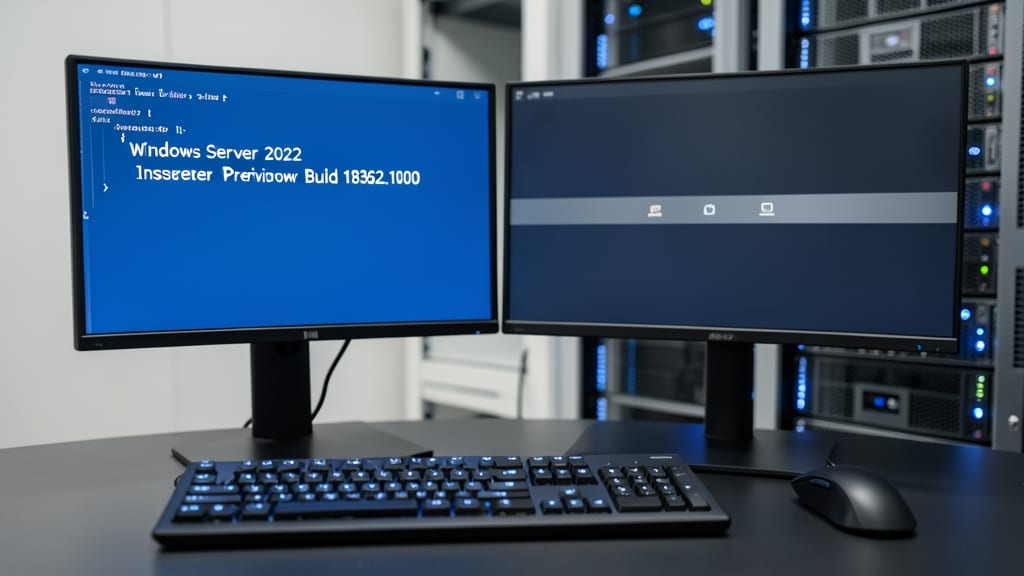
Curious about what’s coming in Windows Server 2022 before it’s officially released? The Insider Preview Build 18362.1000 gives you a sneak peek—ideal for IT teams testing migration paths and evaluating next-gen features in a controlled lab environment.
This experimental build introduces early access to Windows Server 2022 features, including improved security baselines, enhanced container support, and updated PowerShell modules. It’s designed for Windows Insider Program members and requires a separate installation—perfect for developers and sysadmins who want to validate compatibility before production deployments.
If you’re planning a future upgrade, this build lets you test-drive new capabilities without risking your live environment. Just remember: it’s not production-ready and may contain bugs. 💻